A manufacturing floor and a commercial HVAC operation have almost nothing in common — except that both need AI systems that understand their specific world. The terminology is different. The regulations are different. The equipment, the workflows, the failure modes, and the expertise are all different.
An AI model that treats them the same will fail at both.
Why One-Size-Fits-All AI Doesn't Work
The appeal of generic AI tools is understandable. They're quick to deploy, require no customisation, and promise broad capability. But "broad capability" is a polite way of saying "shallow knowledge."
In any specialised industry, the gap between general and specific knowledge is where value lives. A generic AI can tell you what a heat exchanger is. A custom AI can tell you the maintenance interval for the specific heat exchanger model installed in your plant, flag that it's approaching the threshold based on your operational hours, and reference the exact section of the service manual that covers the procedure.
The difference isn't incremental. It's the difference between a tool that people tolerate and one they rely on.
Industries fail with generic AI for several consistent reasons:
- Terminology mismatch. Every industry has its own vocabulary. The same word can mean different things in different sectors. Generic AI uses generic definitions that create confusion.
- Regulatory ignorance. Manufacturing safety regulations, HVAC compliance standards, chemical handling requirements — generic AI has no awareness of which rules apply to your operation.
- Equipment specificity. Your team works with specific equipment from specific manufacturers with specific configurations. Generic AI knows none of this.
- Workflow irrelevance. The procedures that matter to your team are your procedures, not textbook generalisations. Generic AI can't reference processes it's never seen.
The Benefits of Customised AI
When an AI model is trained on your industry's data — your documentation, your processes, your terminology — the advantages compound:
Accuracy That Builds Trust
The most important benefit is the most straightforward: custom AI gives correct answers. When a maintenance technician asks about a procedure and gets back the exact steps from your SOP — referenced, sourced, verifiable — they trust the system. Trust leads to usage. Usage leads to value.
Relevance That Saves Time
Generic answers require interpretation. Custom answers are immediately actionable. Instead of translating a general principle into your specific context, the user gets the context-specific answer directly. The time saved per query is modest. Multiplied across dozens of users and hundreds of daily queries, it's transformative.
Competitive Advantage
Your organisation's knowledge — accumulated over years of operation, thousands of resolved issues, and hard-won expertise — is a competitive asset. Custom AI makes this asset accessible and scalable in a way that static documentation can't. Competitors using generic tools are getting generic results. You're getting answers drawn from your own institutional knowledge.
Higher Adoption Rates
People use tools that help them. When the AI answers domain-specific questions accurately — in language they recognise, referencing systems they work with — adoption happens organically. You don't need to mandate usage or run adoption campaigns. The tool earns its place.
How Customisation Works
Customising an AI model for industry-specific use involves several layers, each building on the last:
Domain-Specific Training Data
The foundation is your organisation's documentation: technical manuals, SOPs, troubleshooting guides, safety protocols, training materials, and historical records. This data is ingested, structured, and indexed so the AI can retrieve and reference it accurately.
Terminology Fine-Tuning
Your industry's vocabulary is mapped and incorporated. Abbreviations, acronyms, brand names, equipment model numbers, and internal naming conventions are all taught to the system. When your team uses their natural language, the AI understands.
Custom Retrieval Configuration
Not all information is created equal. Retrieval systems are tuned to prioritise the most relevant and authoritative sources for each type of query. Safety-critical information gets prioritised over general background. Current documentation takes precedence over archived material.
Industry-Specific Validation Rules
The system is configured with guardrails appropriate to your sector. In safety-critical industries, the AI is more conservative — flagging uncertainty explicitly and escalating rather than guessing. In lower-stakes environments, it can operate with more autonomy.
Industry Examples
Manufacturing
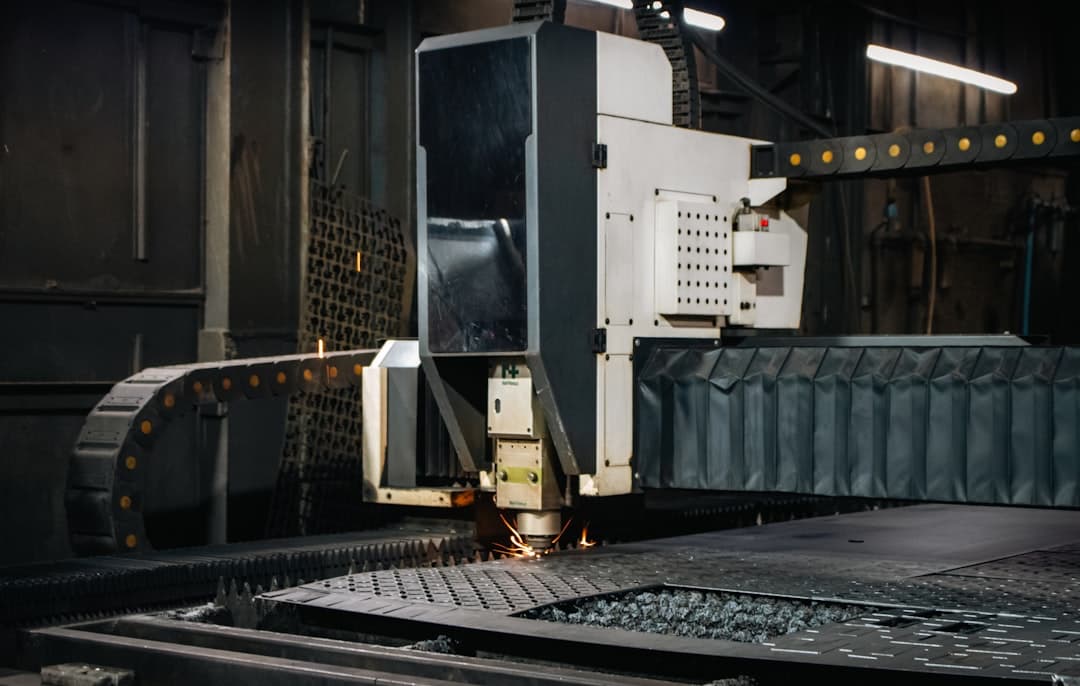
Manufacturing AI handles equipment maintenance queries, parts identification, quality control procedures, and production process support. A machinist can ask about tooling specifications for a specific CNC operation and get an answer that references the correct parameters, materials, and safety requirements for that exact setup.
Key applications: predictive maintenance guidance, fault diagnosis, parts cross-referencing, quality inspection criteria, changeover procedures.
HVAC
HVAC field service teams use AI for on-site troubleshooting, warranty lookups, commissioning support, and compliance verification. An engineer servicing a rooftop unit can query the system mid-job and get model-specific guidance without calling the office.
Key applications: fault code interpretation, refrigerant handling procedures, commissioning checklists, warranty eligibility checks, F-gas compliance documentation.
Chemical Processing
Chemical industry AI prioritises safety above all else. It provides instant access to material safety data, handling procedures, emergency response protocols, and regulatory compliance information. Operators can verify procedures in real time without leaving the control room.
Key applications: COSHH assessment retrieval, emergency procedure lookup, material compatibility checking, regulatory compliance verification, process parameter guidance.
Engineering Consultancy
Engineering firms use AI to provide consistent technical guidance across projects, sites, and disciplines. Design standards, project history, client specifications, and best-practice guidance become queryable resources rather than tribal knowledge.
Key applications: design standard lookup, precedent project search, client specification cross-referencing, technical calculation support, review checklist generation.
The Tarin Approach
Tarin doesn't offer a generic product with an industry skin. Every deployment is built from the ground up around your data, your processes, and your terminology.
We start by understanding your domain — the equipment you work with, the questions your team asks, the documentation you rely on, and the accuracy standards you require. We ingest your knowledge base, structure it for AI retrieval, and deploy a conversational agent that your team can query from any device.
The result isn't a chatbot that sounds vaguely knowledgeable about your industry. It's an AI agent that knows your business — because it was trained on your business.
If you'd like to see what a custom AI agent looks like for your industry, request a demo.
 AI Strategy